Steam Machine Hub: Your Living Room Gaming Powerhouse
Editorial Team ·
Listen to this article~6 min
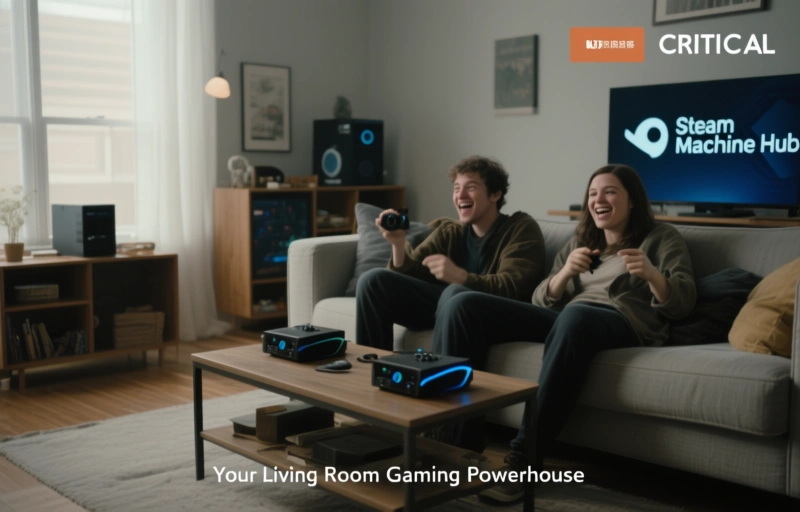
A Steam Machine Hub bridges your gaming PC and living room TV. It's a DIY setup for console-like simplicity with PC power. Learn what it is, how to build one, and if it's right for you.
You've probably seen 'Steam Machine Hub' pop up in gaming forums or Reddit threads. Let's clear something up right away—it's not a new console from Valve. It's actually a brilliant DIY concept that bridges your powerful gaming PC and your living room TV. Think of it as a dedicated command center that lets you access your entire Steam library from your couch. No more dragging your tower downstairs or dealing with complicated setups. You might be wondering how it works, how it compares to something like the Steam Deck, and whether building one is worth your time. Let's dive in and figure this out together.
### What Exactly Is a Steam Machine Hub?
At its heart, a Steam Machine Hub is a PC built with one clear purpose: to be the centerpiece of your living room gaming experience. Here's the important distinction—it's not an official Valve product anymore. The original Steam Machine was Valve's short-lived attempt at pre-built living room PCs, which they discontinued years ago. Why did it fail? Market confusion mostly. It was a tough sell against established consoles like PlayStation and Xbox.
But the idea didn't die. It evolved into a passionate DIY project for enthusiasts who want the best of both worlds. The typical setup involves a compact, living-room-friendly case that fits neatly under your TV. You'll need a wireless controller (the Steam Controller was perfect for this, but any modern gamepad works) and Steam running in Big Picture Mode. The real magic happens in the configuration.
You're optimizing Windows or SteamOS to boot directly into a controller-friendly interface. This ensures every game launches seamlessly, just like a console. The goal is console-like simplicity with PC-level power. Imagine hitting 120 frames per second on your big screen TV—that's the dream this setup makes possible. You're not locked into console hardware cycles, which means you can upgrade components whenever you want.
One crucial note: This is different from streaming games from another PC. A true Steam Machine Hub runs games locally on its own hardware. That means no compression artifacts, no input lag, and no dependency on your home network's performance. It's a self-contained gaming powerhouse sitting right under your TV.
### Setting Up Your Steam Machine Hub
Building a Steam Machine Hub can be half the fun—or half the headache, depending on your patience level. You'll need to consider several key factors:
- **Form factor**: Small cases look great in living rooms but can be tricky to build in
- **Cooling**: Compact spaces get hot quickly, so you'll need efficient cooling solutions
- **Wireless connectivity**: Controllers, headsets, and sometimes even keyboards need reliable connections
- **Power management**: You want the system to wake up instantly when you grab your controller
The community has really embraced this concept. Browsing setup guides on gaming forums can save you hours of troubleshooting. People have shared their experiences with different cases, cooling solutions, and software tweaks. The ultimate goal is what I call the 'invisible system.' You press a button on your controller, your TV and sound system wake up automatically, and you're browsing your game library within seconds.
### Steam Machine Hub vs Steam Deck: Which Is Right For You?
This comparison comes up constantly, and here's how I see it: they're cousins, not twins. The Steam Deck is a brilliant, self-contained portable gaming device. It's perfect for gaming on the go, during commutes, or in bed. The Steam Machine Hub is a stationary powerhouse designed for your living room.
The debate really comes down to your primary screen. Want to play anywhere? Get the Deck. Want to max out graphics at 4K resolution on a 65-inch OLED TV? That's hub territory. The beautiful part is they can work together beautifully. You could stream games from your powerful hub to your Deck while moving around your house.
You might have heard about Steam's $5 rule. What was that about? It was an old system where you needed to spend at least $5 in the Steam store to access certain community features like adding friends or trading cards. It was meant to curb spam accounts. While it's mostly irrelevant now and doesn't affect your hub setup, it's interesting trivia that shows how Valve has built their ecosystem over time.
### The Future and Your Decision
Let's address the big question everyone's asking: Will there be a Steam Machine 2? Is Valve planning to revive this concept? The constant speculation about release dates is just that—speculation. Valve operates in their own unique way. They have the massively successful Steam Deck now, which might make a new living room box seem less likely.
But never say never. The gaming landscape keeps evolving. What's clear is that the community hasn't waited for Valve. Enthusiasts have built their own solutions, sharing knowledge and creating something that works for them. The DIY spirit is alive and well in the PC gaming world.
So, is a Steam Machine Hub right for you? Consider this: if you love tinkering with technology, want the absolute best gaming experience on your big screen TV, and don't mind putting in some setup time, it could be perfect. If you prefer plug-and-play simplicity, a traditional console or the Steam Deck might suit you better.
Remember what one seasoned builder told me: "The best system is the one you'll actually use." Whether that's a meticulously crafted Steam Machine Hub or a simpler setup, what matters is that it gets you gaming. And isn't that the whole point?